






Skip to content
jump.ac

Fleet charging partner

Charge every van on time and pay less for it

jump.ac plans when each vehicle charges, keeps the depot under its grid limit and spots a failed session overnight. Our team sets it up with you and stays on hand.

Aerial view of a fleet of white vans parked along a road

Get a first estimate of what smart charging saves you each year.

vehicles

A day at the depot

Four moments where fleet charging goes wrong

Fleet managers describe the same ones on almost every first call. Here is how jump.ac handles each.

18:05

Every van plugs in at once

Ten vans on 11 kW chargers can draw 110 kW the moment the shift ends. Many depots have far less spare capacity, and a grid upgrade takes months.

Load management shares the power across chargers, so the site stays under its limit and vans still leave full.

Smart charging and load management
02:14

A session stops and nobody sees it

A charger goes offline or a session ends early. Drivers find out at 6 a.m., when the van has 30% left.

jump.ac flags the fault overnight and we follow up before the shift starts.

Charging monitoring
09:00

Three charger brands, three apps

Each brand has its own portal and login, and there is no shared view of the depot. Faults sit in whichever app nobody checks.

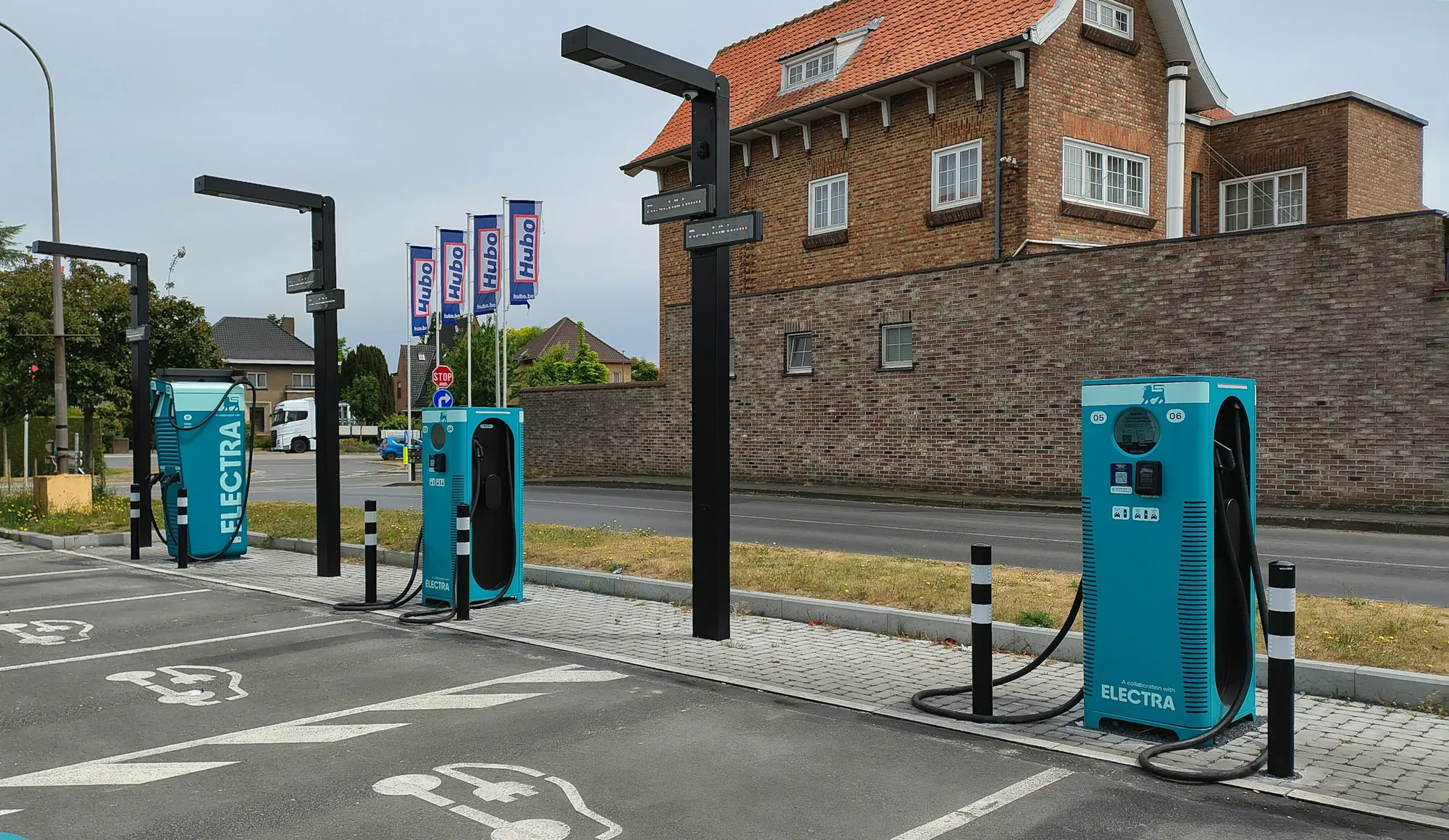
Every OCPP charger, whatever the brand, runs in one jump.ac account that we set up with you.

Charger setup
Month end

The energy bill is a surprise

Peak demand charges, public charging at 50 cents per kWh and driver reimbursements make the monthly cost hard to predict.

Charging moves to cheaper hours, the depot peak stays low, and you get one monthly cost report.

Cost and CO₂ reporting

Why jump.ac

Why fleets work with us

Installers put chargers in and utilities sell power. jump.ac is the software that makes them work for your fleet, and our team helps you get the most out of it.

  1. Every site in one place

    All chargers, vehicles and costs in one view, whatever the charger brand.

  2. Any OCPP charger

    jump.ac works with any OCPP-compliant charger, so you choose hardware on price and service.

  3. Numbers you can check

    Every cost and saving comes with its assumptions and sources.

  4. A team behind the software

    We set jump.ac up with you, keep watching after go-live and report to you every month.

How a project runs

From the first connected charger to the monthly report

  1. Connect

    We connect your chargers to jump.ac and set up charging for your vehicles and shifts.

  2. Balance

    Load management keeps the site under its grid limit and moves charging to cheaper hours.

  3. Monitor

    We watch chargers and sessions every day and follow up on faults.

  4. Report

    You get a monthly report on energy, cost and CO₂ per site and vehicle.

Software

Every charger, vehicle and kWh in one place

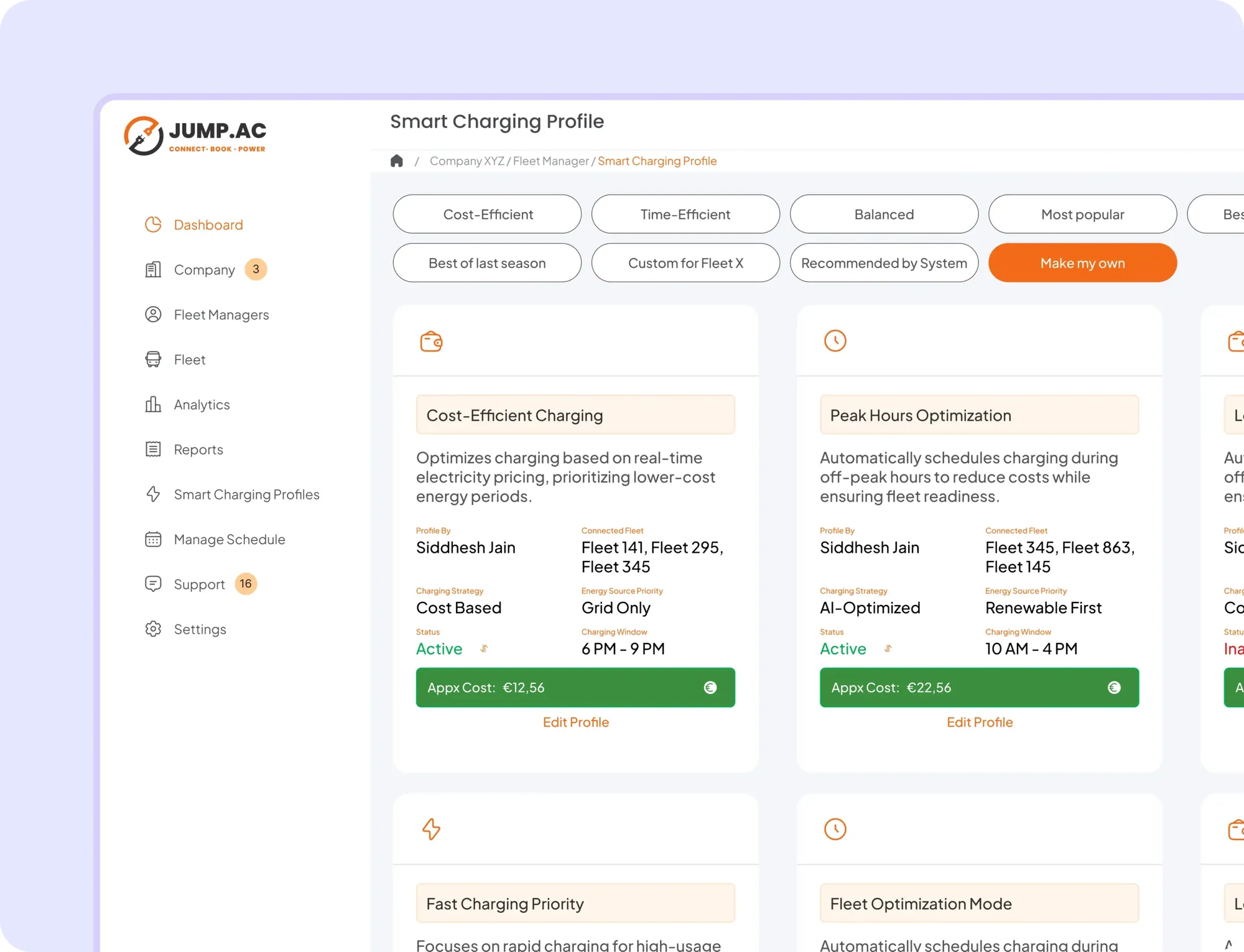
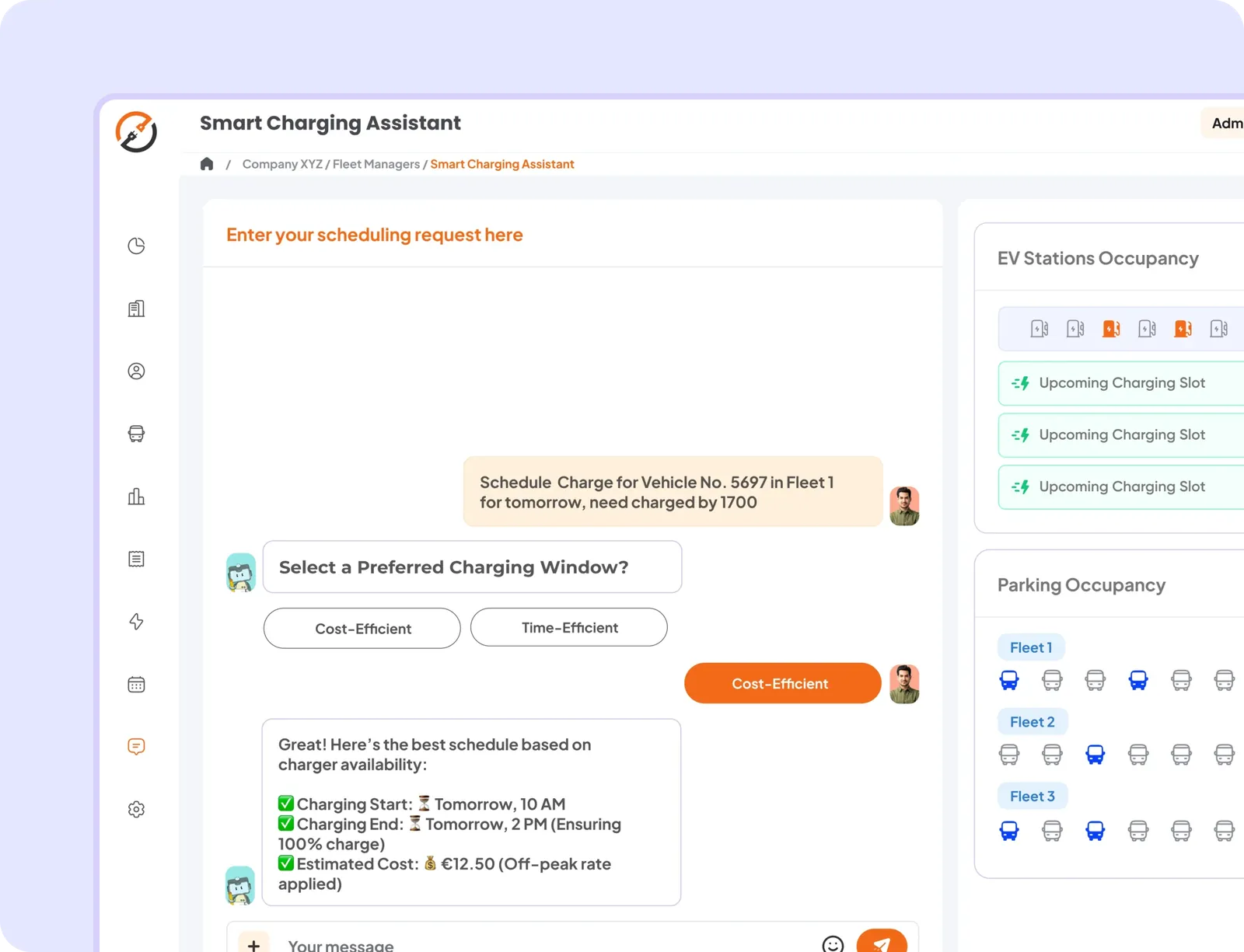
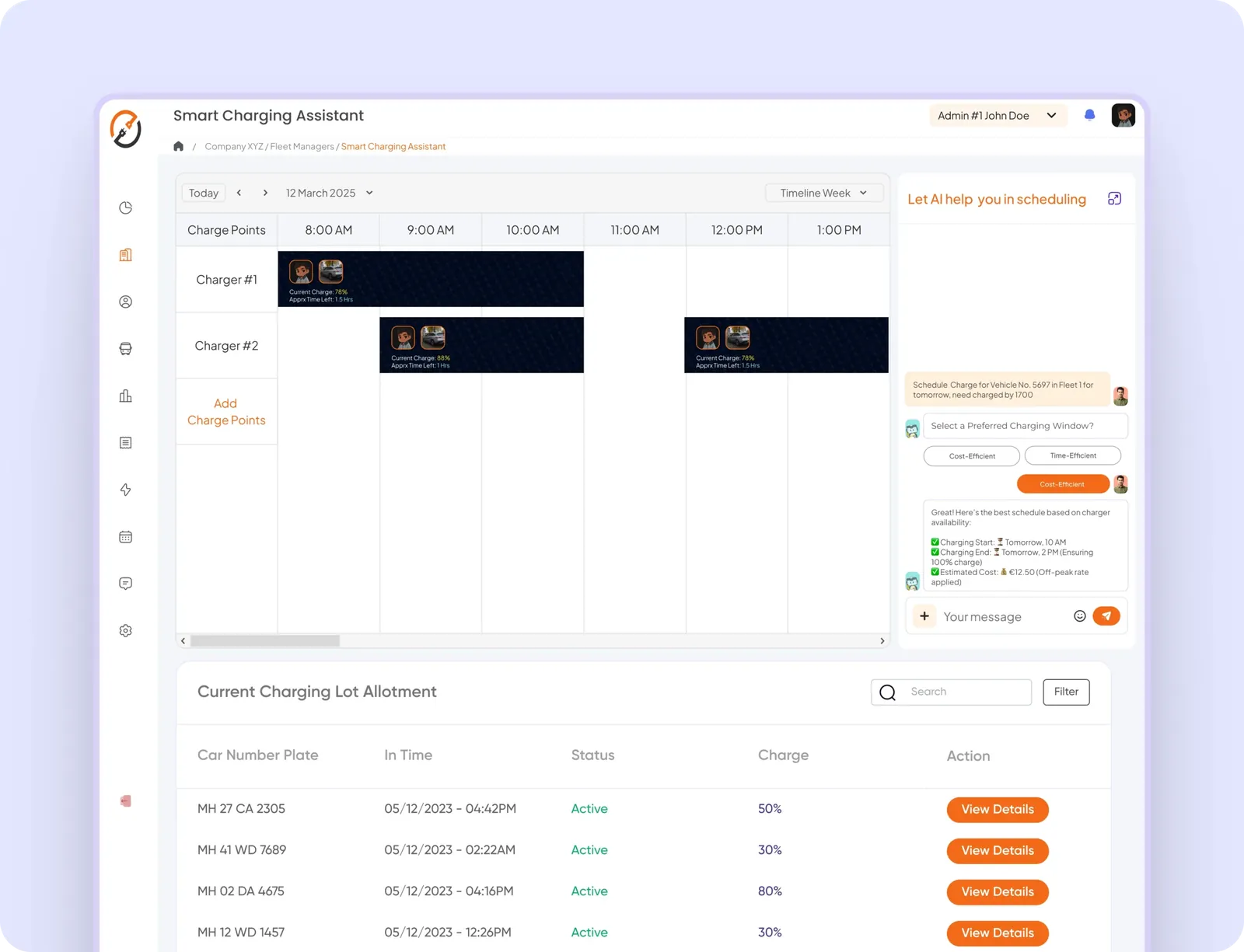
Plan when each vehicle charges, keep the depot under its limit and see a fault the moment it happens, for every site and any charger brand.

See the software
jump.ac charging schedule

Pricing

Packages and pricing

We quote per project after a first call, because fleets differ in size, sites and grid connection.

Connect

For fleets with chargers already on site.

Custom / quote

  • Chargers connected to jump.ac
  • Charging profiles per vehicle group
  • A short handover for your team
Request a quote

Balance

For depots close to their grid limit.

Custom / quote

  • Everything in Connect
  • Dynamic load management
  • Tariff-aware schedules
  • Peak load before and after
Request a quote

Run

For fleets that want charging taken care of.

Custom / quote

  • Everything in Balance
  • Daily monitoring and fault follow-up
  • Monthly cost and CO₂ report
  • One named contact at jump.ac
Request a quote

Calculator

Electric fleet TCO calculator

Estimate running costs, payback and CO₂ for your fleet, and the depot chargers you would need. Every assumption is shown and can be changed.

Open the calculator

Quick estimate for diesel vans

Running costs saved
€36,141 /yr
CO₂ avoided
86 t/yr
See payback, TCO & chargers

Sourced defaults. Refine every number in the full calculator.

Blog

News from jump.ac

All articles

FAQ

Questions about fleet charging

Cannot find your question here? Write to us and we will answer it for your fleet.

Ask your question
What is fleet charging?

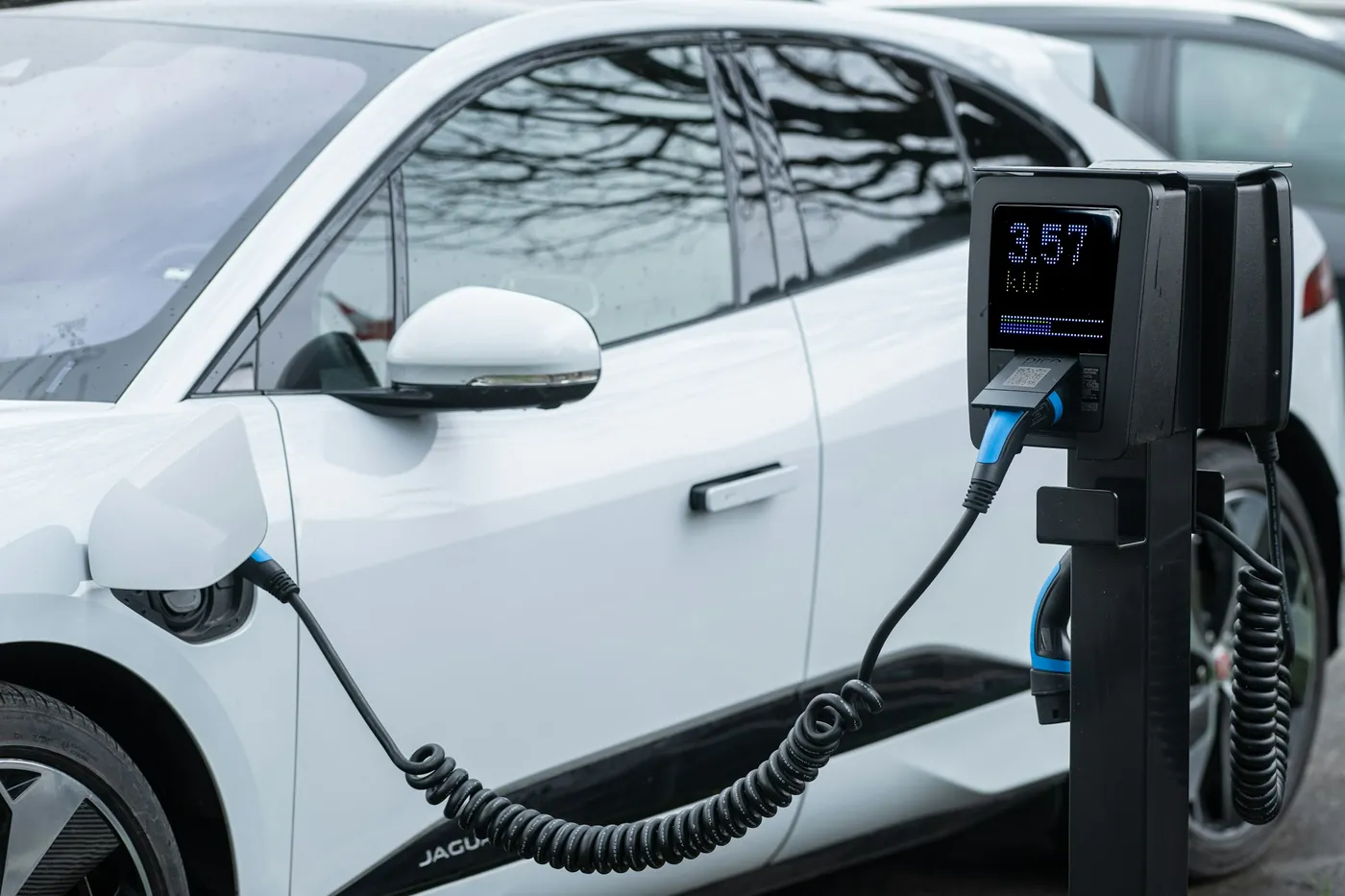
Fleet charging is charging a company’s electric vehicles, usually at the depot overnight and sometimes at public chargers during the day. The goal is that every vehicle has enough range for its next shift at the lowest energy cost.

Fleet charging or public charging: which is cheaper?

Depot charging is usually much cheaper per kWh than public charging, and you control when it happens. Most fleets charge at the depot overnight and use public charging only on long days.

What is dynamic load management for EV charging?

Dynamic load management shares the available power across chargers in real time, based on your grid limit and when each vehicle leaves. It keeps the site below its peak and avoids or delays a grid-connection upgrade.

Is there funding for charging infrastructure for companies?

Funding programmes for company charging infrastructure change often and differ by state. Ask us on a first call and we will tell you which ones we know of for your state.

Do you install chargers yourselves?

No. Your installer puts the chargers in, and we take over from there: we connect them to jump.ac, set up charging and run it.

Do we need to buy specific chargers?

No. jump.ac works with OCPP-compliant chargers from different manufacturers, so you can choose hardware on price and service.

Can we start with only a few vehicles?

Yes. Most fleets start with one site and a first group of vehicles. The plan is built so you can add vehicles and sites later.

How does smart charging lower costs?

Instead of every vehicle charging at full power the moment it plugs in, sessions are spread across the hours vehicles stand still. That lowers the depot peak, which drives demand charges and grid-connection costs.

What does it cost?

Every fleet is different, so we quote per project. The savings calculator gives you a first estimate before you talk to us.

Next step

Talk to us about your fleet

Tell us how many vehicles you run and where they park. We reply within one working day with a suggested first step.