
Services
Your installer puts the chargers in. We connect them to jump.ac, set the load limits, keep an eye on every session with you and send you the numbers each month.
Services
Problems we solve for fleets
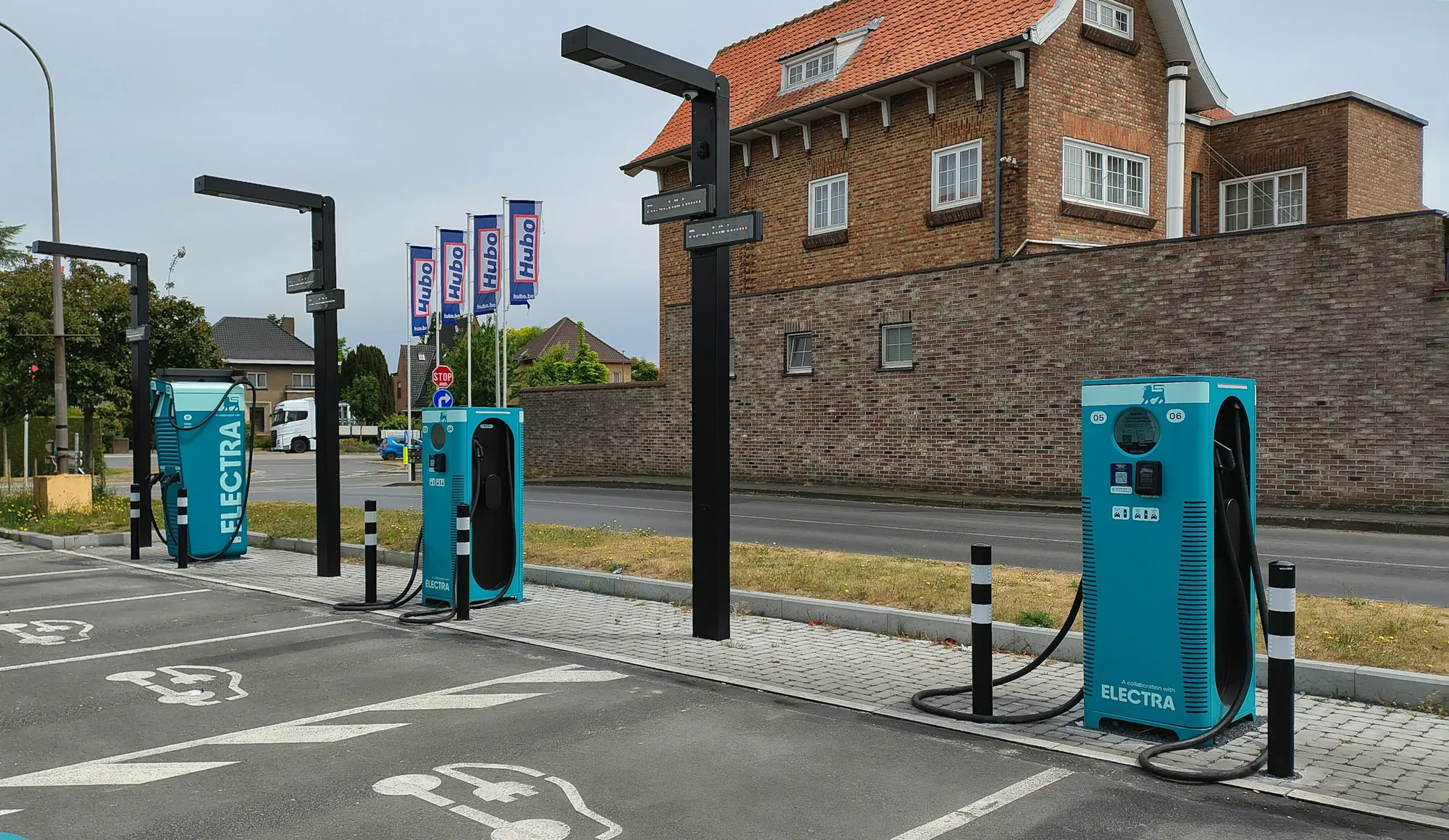
Charger setup
We take over your chargers, whatever the brand, and set charging around your shifts.
- Charger registration over OCPP
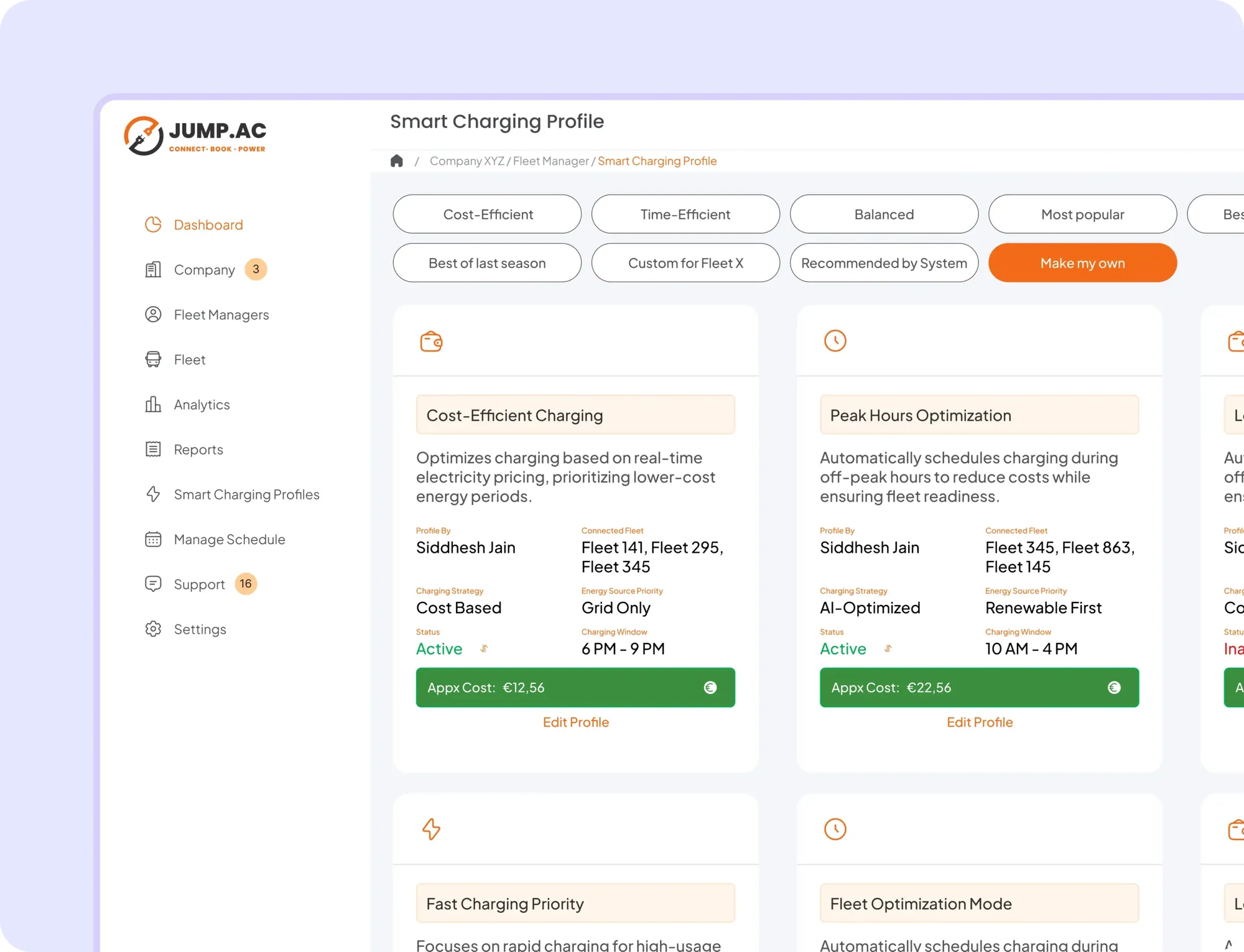
- Charging profiles per vehicle group
- Driver access and booking setup
Smart charging and load management
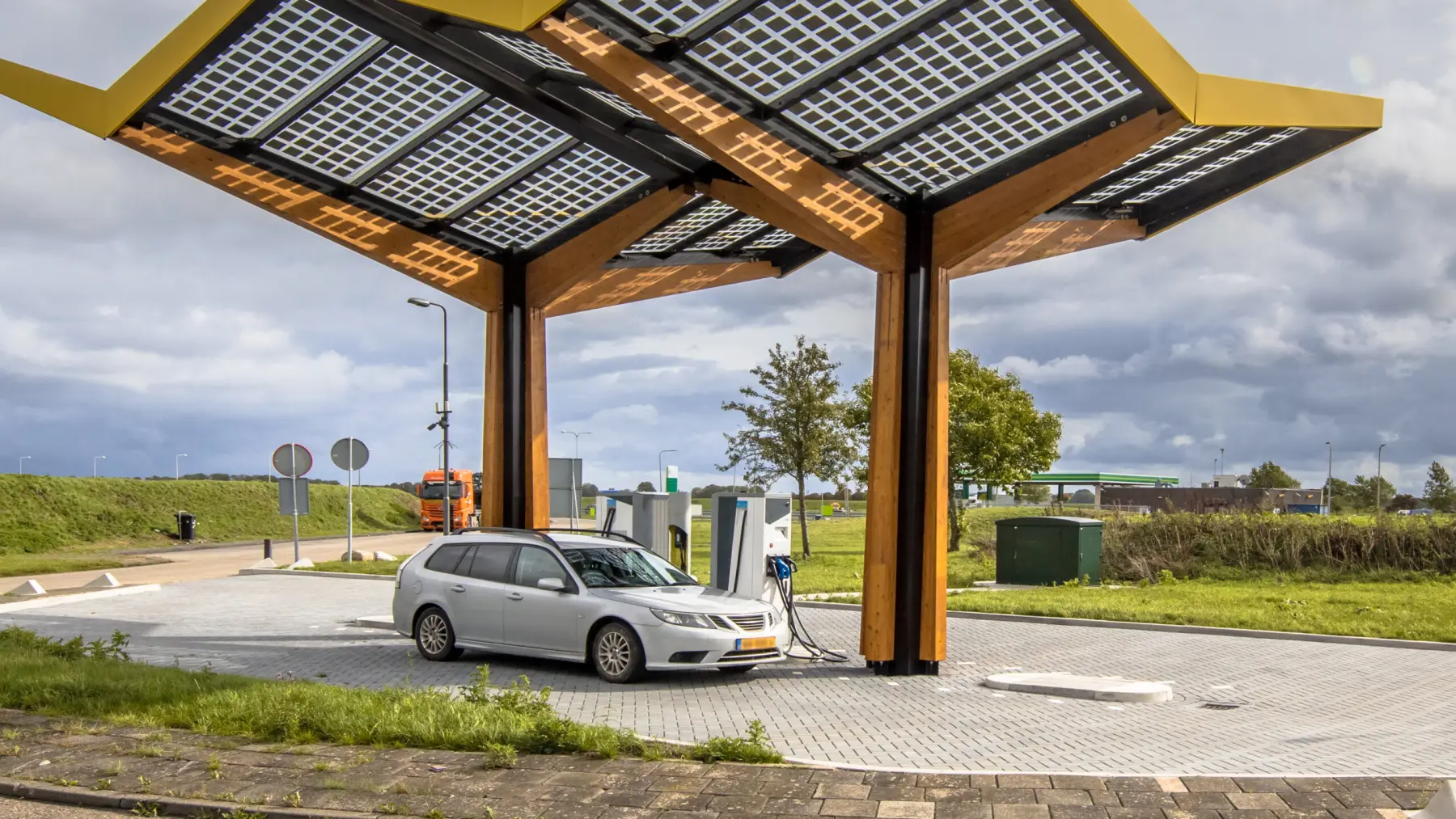
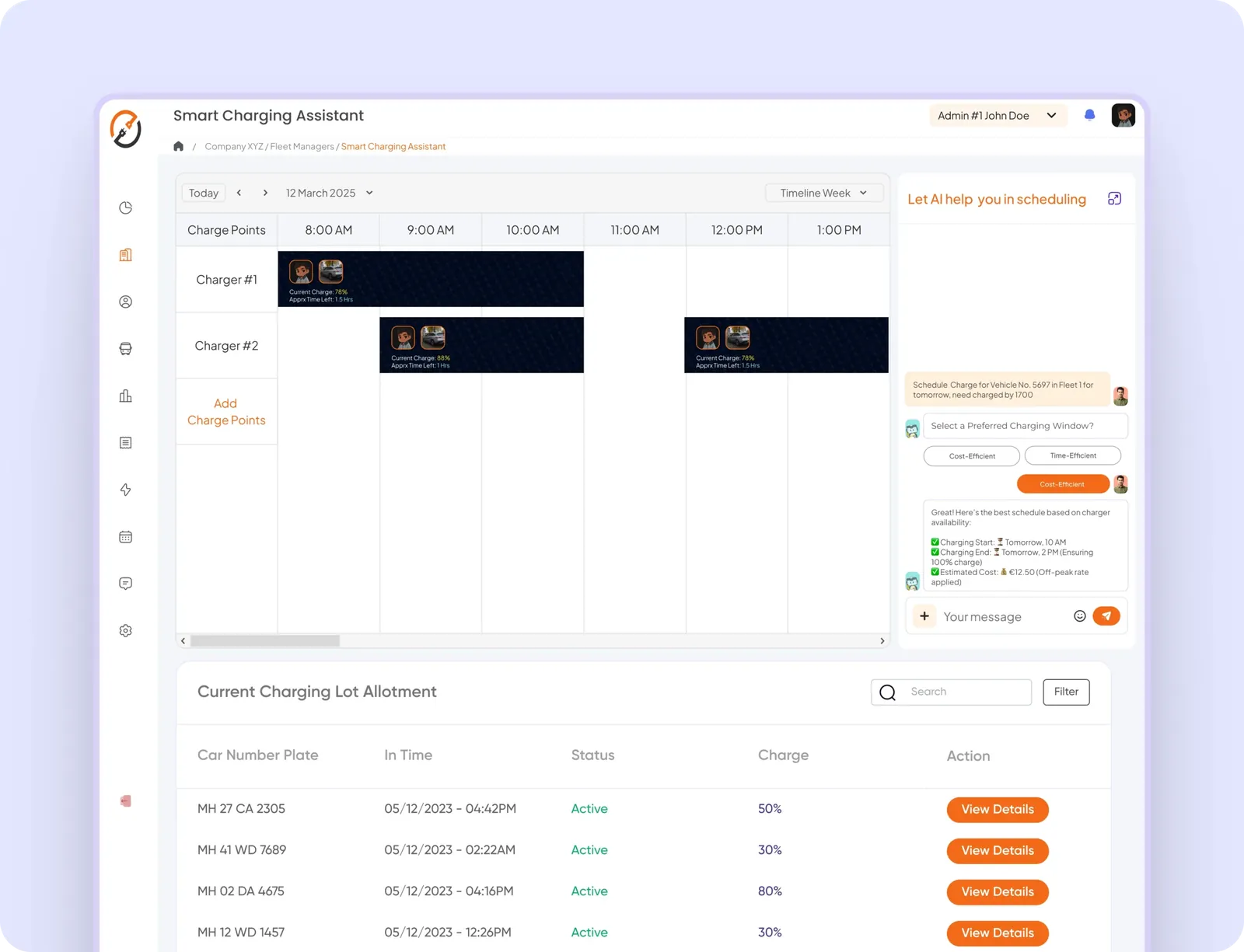
We set up load management so the site stays under its grid limit and charges in cheaper hours.
- Dynamic load management per site
- Priorities by departure time
- Tariff-aware schedules
Charging monitoring
We watch your chargers and sessions every day and follow up on faults before the shift starts.
- Daily charger and session monitoring
- A message to you when a vehicle is affected
- Remote restarts and diagnostics
Cost and CO₂ reporting
You get one monthly report on energy, cost and CO₂ per site and vehicle.
- Monthly energy and cost report
- CO₂ avoided per vehicle
- Export for finance and reimbursements
Pricing
Packages and pricing
We quote per project after a first call.
Connect
For fleets with chargers already on site.
Custom / quote
- Chargers connected to jump.ac
- Charging profiles per vehicle group
- A short handover for your team
Balance
For depots close to their grid limit.
Custom / quote
- Everything in Connect
- Dynamic load management
- Tariff-aware schedules
- Peak load before and after
Run
For fleets that want charging taken care of.
Custom / quote
- Everything in Balance
- Daily monitoring and fault follow-up
- Monthly cost and CO₂ report
- One named contact at jump.ac
FAQ
Questions about fleet charging
What is fleet charging?
Fleet charging is charging a company’s electric vehicles, usually at the depot overnight and sometimes at public chargers during the day. The goal is that every vehicle has enough range for its next shift at the lowest energy cost.
Fleet charging or public charging: which is cheaper?
Depot charging is usually much cheaper per kWh than public charging, and you control when it happens. Most fleets charge at the depot overnight and use public charging only on long days.
What is dynamic load management for EV charging?
Dynamic load management shares the available power across chargers in real time, based on your grid limit and when each vehicle leaves. It keeps the site below its peak and avoids or delays a grid-connection upgrade.
Is there funding for charging infrastructure for companies?
Funding programmes for company charging infrastructure change often and differ by state. Ask us on a first call and we will tell you which ones we know of for your state.
Do you install chargers yourselves?
No. Your installer puts the chargers in, and we take over from there: we connect them to jump.ac, set up charging and run it.
Do we need to buy specific chargers?
No. jump.ac works with OCPP-compliant chargers from different manufacturers, so you can choose hardware on price and service.
Can we start with only a few vehicles?
Yes. Most fleets start with one site and a first group of vehicles. The plan is built so you can add vehicles and sites later.
How does smart charging lower costs?
Instead of every vehicle charging at full power the moment it plugs in, sessions are spread across the hours vehicles stand still. That lowers the depot peak, which drives demand charges and grid-connection costs.
What does it cost?
Every fleet is different, so we quote per project. The savings calculator gives you a first estimate before you talk to us.
Next step
Talk to us about your fleet
Tell us how many vehicles you run and where they park. We reply within one working day with a suggested first step.